
What is Positive Consumption
The fast fashion industry is hard on the environment. It is responsible for about 2-8% of global carbon emissions and is the second largest consumer of water, according to the UN Environment Programme. In addition, about 20% of fabric is wasted, according to the Apparel Impact Institute.
Consumers who are aware of the environmental costs of fast fashion are seeking alternatives. In the United States, 38% of consumers often look for more information about brand's sustainability practices, and 70% of consumers are more concerned about product sustainability than they were a year ago, according to a 2023 Stifle; Morning Consult report. These consumers are driving growth of the second-hand apparel industry and the ethical fashion market. Threadup reports that in 2028, the global second-hand apparel market is projected to be worth $350 billion.
THE DESIGNER'S ROLE
The fast fashion industry is hard on the environment. It is responsible for about 2-8% of global carbon emissions and is the second largest consumer of water, according to the UN Environment Programme. In addition, about 20% of fabric is wasted, according to the Apparel Impact Institute.
A fashion designer gets to do more than make their visions come to life; they get to choose how they are going to conduct their practices, and to that effect, what standards they are enforcing. Designers can work with more convenient, and inexpensive, traditional models of production, or actively choose to not feed into a corrupt, arguably, broken system. Here are some Chicago designers who, in the face of a changing world, have embraced adaptability and sustainability in their craft.
JACOB VICTORINE
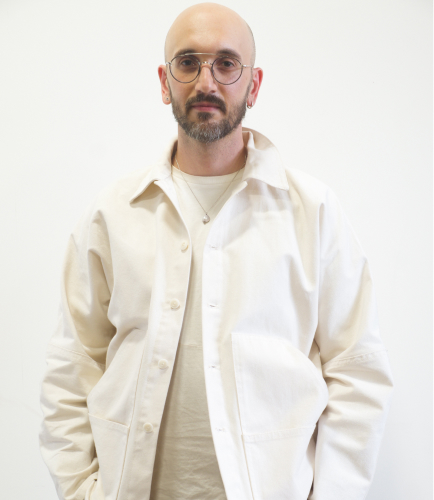
Jacob Victorine, a practitioner-in-residence at Columbia College Chicago, is a leader in responsible fashion. His brand, ALL WE REMEMBER, does not claim to be a sustainable brand, but tries to operate as responsibly by accepting restrictions aimed at being less harmful to the environment.
"I actually think that restrictions often set the table for more creativity," he says. "I think that one of the most challenging things for a designer or an artist to do is to just say, 'Oh, I have a world of possibilities. Now I'm going to make something interesting and meaningful.' So I actually think giving yourself a constraint is one of the most helpful approaches to making things that are interesting, beautiful, meaningful, etcetera."

NICK D'ALESSANDRO
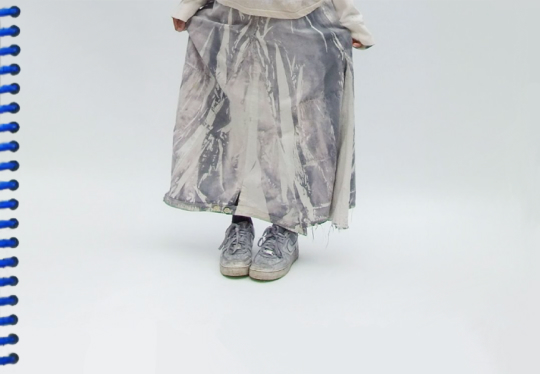
Nick D'Alessandro, a 2023 graduate of the School of the Art Institute of Chicago, is lead designer of WWWYRED, a clothing brand that up-cycles old textiles from thrift stores and rag houses into quality items. His brand explores the intersection of technology and nature, basing patterns on everything from circuit boards to natural phenomena.
"Sustainability has been a huge through-line in my practice, none of my materials are new," he says. "I also just think about the end of times a lot, and I've always kind of been obsessed with that idea that one day that this isn't going to be here, and what that looks like and how we can fix that."

JACKIE WOLF-SCHMIDT
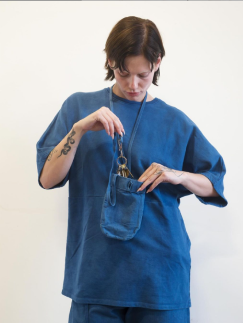
Jackie Wolf-Schmidt, a Teen Vogue New Generation Artist Award recipient and master's student at the Fashion Institute of Technology, has been collecting can tabs for almost four years in hopes of inspiration striking. It finally hit in the form of her upcoming bottle tab collection, a truly unique assemblage of clothing made from found materials.
"One of the first fashion classes I took was an up-cycling textile class, so I learned how to use found objects or materials around me to create textiles for garments," she says. "I collect materials, and then when I find a use for them, I kind of think about a way, how can I transform them into garments?"
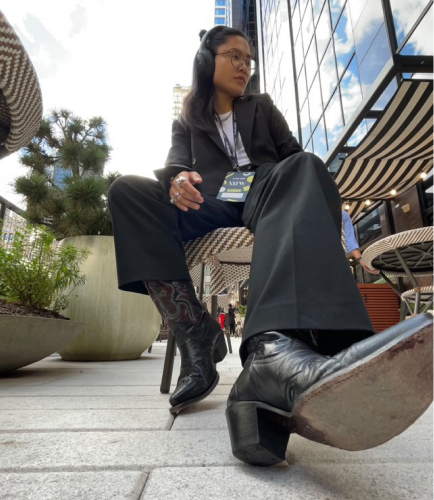
KAINE BAUTISTA
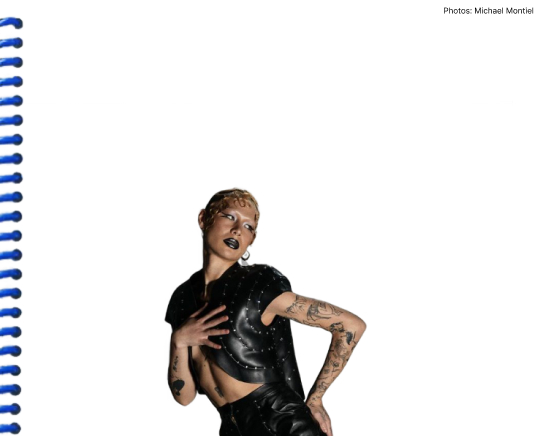
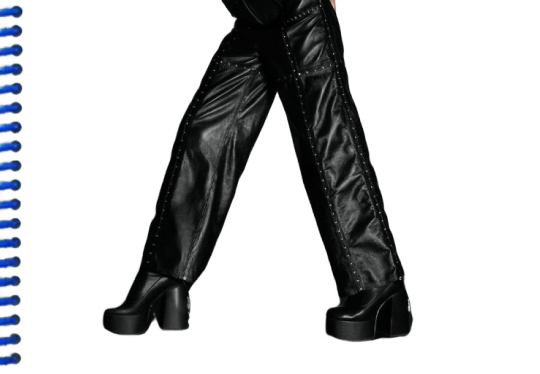
Kaine Bautista graduated from the School of the Art Institute of Chicago in 2023 and was part of Chicago Fashion Week in 2024. Their collection, which was inspired by an exploration into brain cells and how those can be brought to life, was made of leather scraps and hand-hammered staples.
"I was inspired by science fiction. A lot of artists like Simon Stalenhag and HR Giger. I really like the shapes they make with the aliens and artwork they make and the colors that they use," they say. "Sustainability not only comes with where my materials come from, but also making sure the garment lasts a long time."

Flip Through
The Look Book
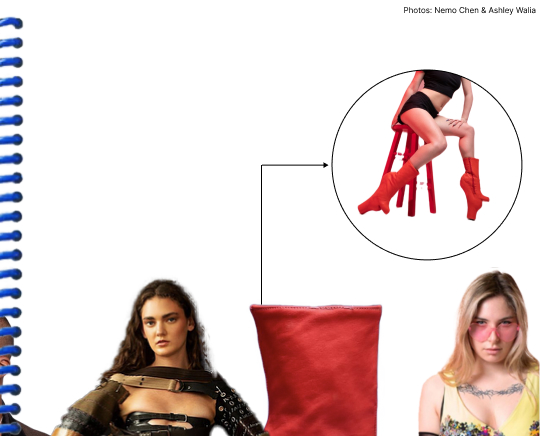
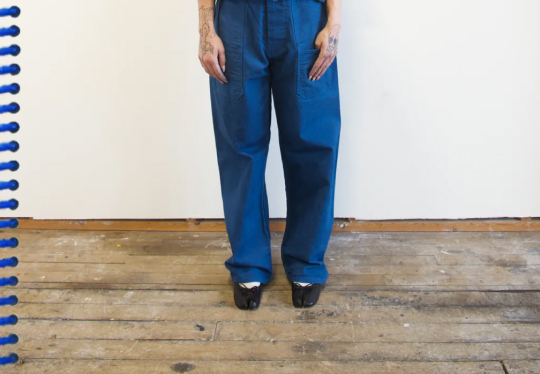
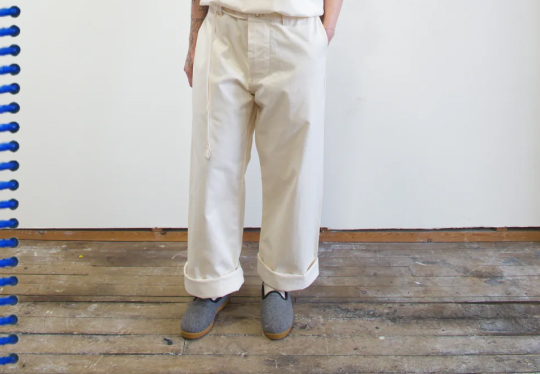
Below you can find experiment combining pieces from the featured designers and learn more about their creative processes and tips for becoming more of a positive consumer.